How the Inner East Bay Housing Market Is Defying National Trends in 2026
When people ask me, "How's the market?" they're often hoping for a simple answer. The truth is, real estate is much more nuanced than whether prices are up or down.
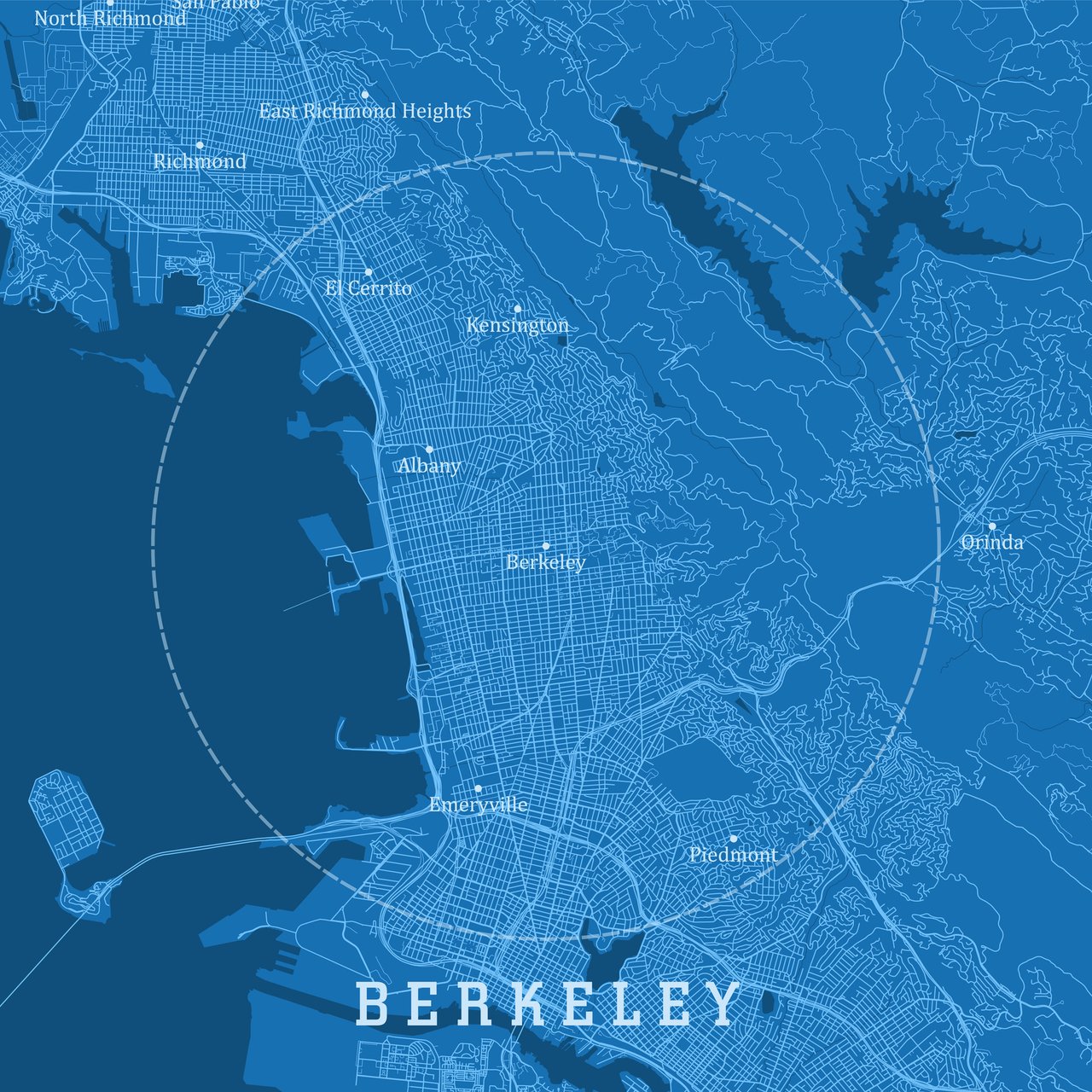
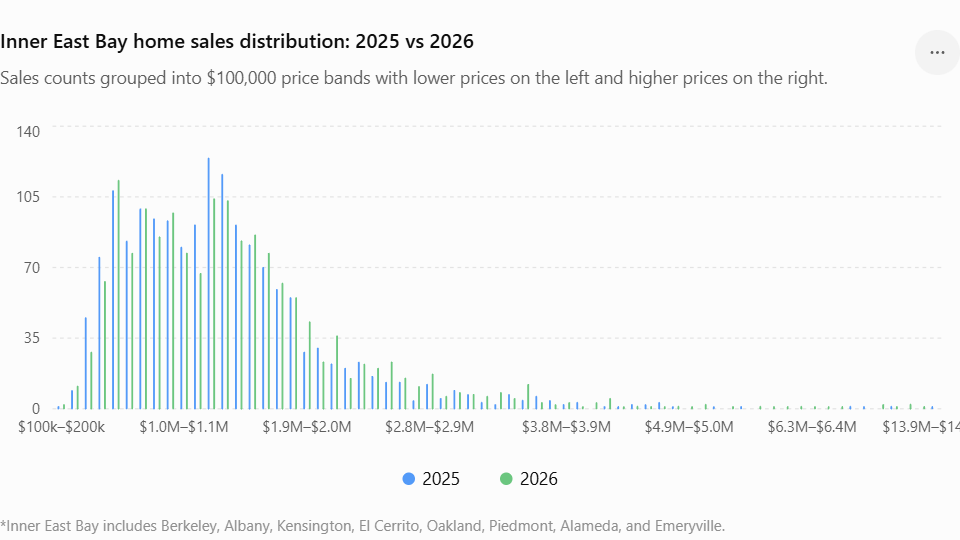
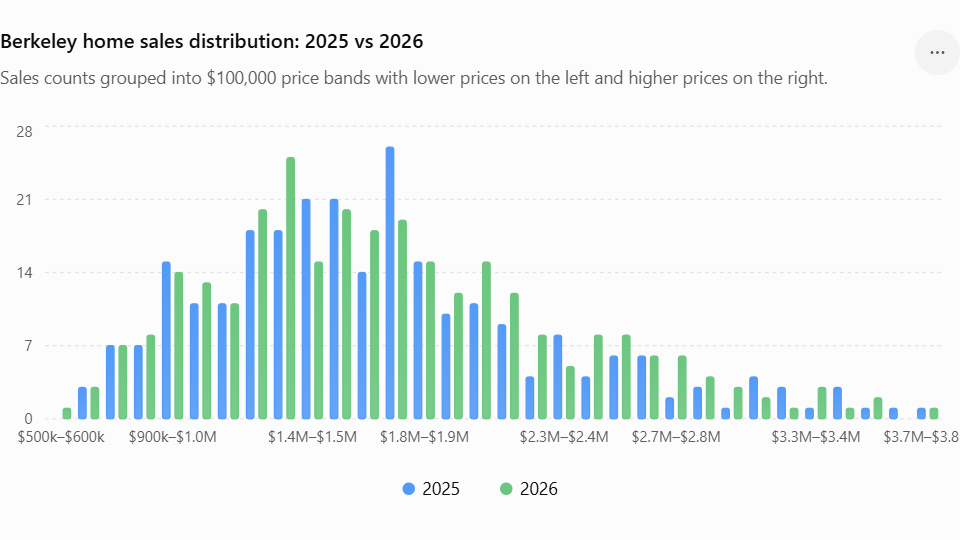
The charts below analyze every home sale during the first half of 2025 and the first half of 2026 across Berkeley, Albany, Kensington, El Cerrito, and the Inner East Bay. Looking at where homes are actually selling—and at what price points—often tells a much richer story than national headlines.
One of my favorite ways to understand what's really happening is to look at where buyers are putting their money. By comparing every home sold during the first half of 2025 with every home sold during the first half of 2026, some interesting trends begin to emerge.
Buyers Are Active Across Every Price Point
Perhaps the biggest takeaway is that buyers haven't disappeared. They're still purchasing homes from entry-level condos to multi-million-dollar estates.
The overall distribution of sales is remarkably similar from one year to the next. Rather than seeing one segment of the market collapse or another explode, we're seeing healthy demand spread across nearly every price range.
That tells us something important: today's market is being driven by real buyers making thoughtful decisions—not by speculation.
Luxury Buyers Continue to Drive the Upper End of the Market
One of the most interesting patterns in this year's data is the continued strength of the luxury market. Homes above $2.5 million—and even above $5 million—are still selling throughout the Inner East Bay. In Berkeley and several neighboring communities, sales extend well into the eight-figure range.
One of the reasons is the Bay Area's unique economy. The rapid growth of artificial intelligence companies and related technology firms has created a new wave of high-income buyers. Employees, founders, investors, and executives are increasingly choosing to put down roots in the East Bay, drawn by its distinctive architecture, vibrant communities, highly regarded schools, and convenient access to San Francisco and Silicon Valley.
That demand has helped our local housing market outperform much of the country. While many regions have experienced flat or declining home values as higher mortgage rates have cooled demand, the Inner East Bay has continued to appreciate. Limited inventory, combined with sustained demand from well-qualified buyers, has created competition that continues to support home values—especially for thoughtfully prepared homes in desirable neighborhoods.
It's another reminder that real estate is local. National headlines often paint one picture, but our market is influenced by economic forces that are unique to the Bay Area.
Every Community Has Its Own Story
Looking neighborhood by neighborhood also highlights why local expertise matters.
Berkeley continues to have the broadest range of prices and the deepest luxury market, with sales extending well above $5 million.
El Cerrito remains concentrated in approximately the $900,000 to $1.6 million range, reflecting strong demand for move-up buyers seeking excellent value.
Kensington continues to perform exceptionally well between approximately $1.2 million and $2.2 million, reflecting its limited inventory, unique homes, and enduring appeal.
Albany remains one of the East Bay's most competitive communities, with much of its activity centered between approximately $1.1 million and $1.8 million as buyers continue to prioritize its exceptional schools and walkable neighborhoods.
Each market behaves a little differently, which is exactly why broad national headlines often miss what's really happening in our own backyard.
Looking Ahead
If current trends continue, I expect the Inner East Bay to remain one of the strongest housing markets in the country.
The same fundamentals that have supported our market over the past several years remain firmly in place: limited housing inventory, highly desirable neighborhoods, outstanding schools, and continued job growth fueled by the Bay Area's technology sector.
Another factor to watch is the continued expansion of artificial intelligence companies. While no future liquidity events are guaranteed, many industry observers expect additional wealth creation as leading AI companies mature. If that happens, the Bay Area—and particularly communities offering exceptional quality of life within commuting distance of San Francisco—could see another wave of well-qualified buyers entering the market.
At the same time, many buyers who once focused exclusively on San Francisco are discovering that they can find larger homes, more outdoor space, top-rated schools, and strong communities in the Inner East Bay. That migration has already helped support home values, and it remains a trend worth watching.
Of course, interest rates, inventory levels, and the broader economy will continue to influence the market. But based on today's data, the fundamentals supporting our local market remain exceptionally strong.
What This Means for Buyers and Sellers
For sellers, today's market is still rewarding homes that are thoughtfully prepared and strategically priced. Buyers continue to recognize value and are willing to compete for homes that are presented well.
For buyers, opportunities still exist—even in competitive neighborhoods. Understanding where demand is strongest, how inventory is moving, and which price ranges are most competitive can help you make smarter decisions.
The biggest lesson from these charts is simple: the Inner East Bay housing market isn't following the national script.
While much of the country is experiencing slower sales and price pressure, our market continues to benefit from a resilient local economy, limited housing supply, and steady demand from buyers who want to build their lives here.
If you're wondering what these trends mean for your own home—or for the neighborhood where you hope to buy—I'd love to help you interpret the numbers. Every successful move begins with understanding your local market, and there's no substitute for data combined with local expertise.
Reach out for data on your specific neighborhood!
Inner East Bay includes Berkeley, Albany, Kensington, El Cerrito, Oakland, Piedmont, Alameda, and Emeryville.